KAREN CHURCH
Holistic Health Coach
Join the VIP Waitlist for the Book
Get early access when the book is released
Receive exclusive content and insights not shared publicly
Go deeper into this work as it unfolds
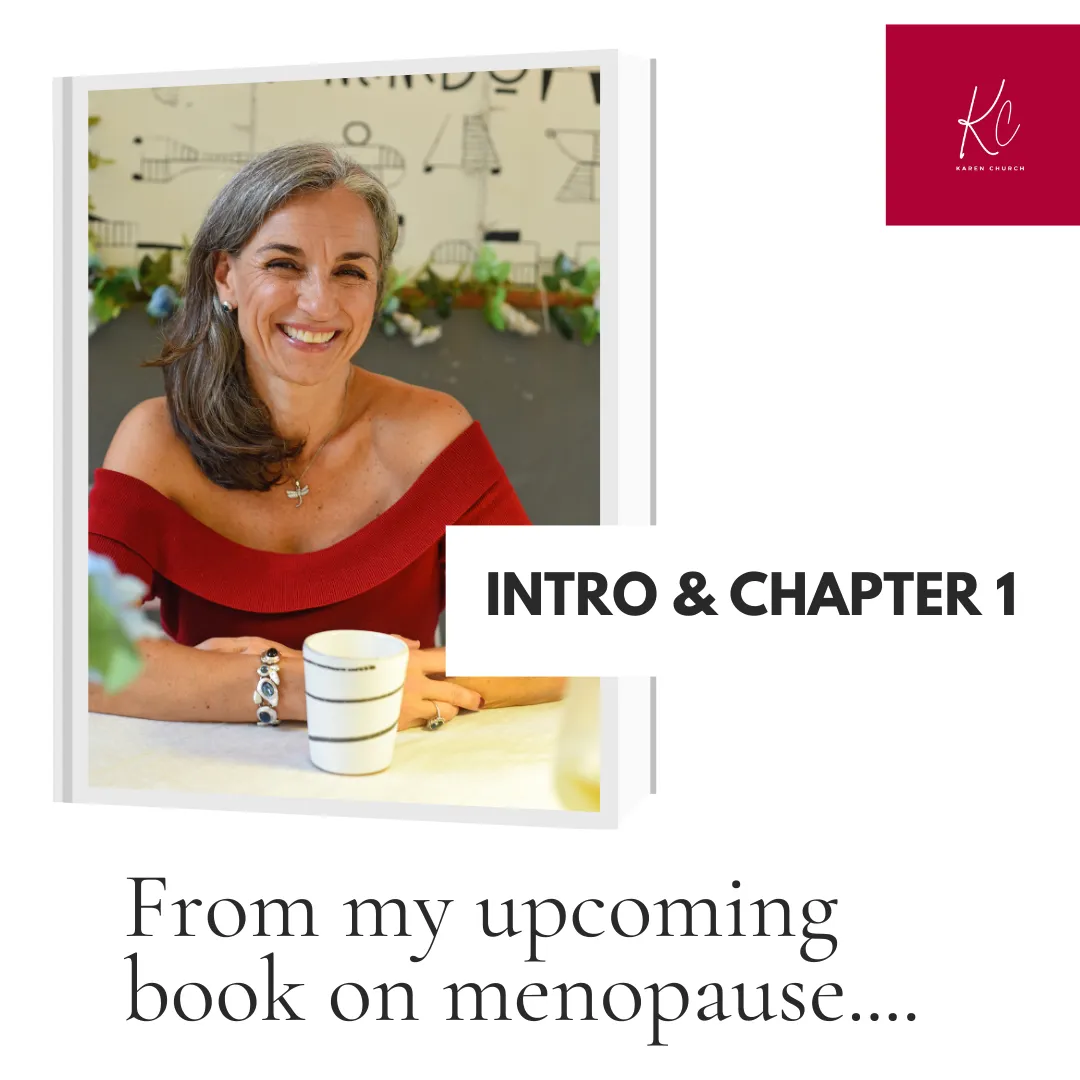
Read the First Chapter of My Upcoming Book on Menopause
What if the symptoms you’ve been told are “just part of menopause”… are actually messages your body is asking you to understand?
I’m currently writing my upcoming book on menopause—a guide designed to help you finally make sense of what’s really happening in your body… and how to support it in a way that feels grounded, calm, and sustainable.
This isn’t about pushing harder, cutting more, or chasing quick fixes.
It’s about learning how to work with your body—so you can feel like yourself again.
For a limited time, you can read the Preface, Introduction, and Chapter 1 of the book.
Inside, you’ll begin to:
Understand why what used to work no longer does.
See your symptoms through a completely different lens.
Feel reassured that nothing about your body is “broken”.
If you’ve been feeling frustrated, stuck, or like your body has suddenly changed the rules…
You’re not alone and you’re not imagining it.
Scroll down to begin reading.
Preface: A Note Before We Begin
If you’ve been wondering what’s happening to your body — why your energy, mood, or metabolism seem to have shifted almost overnight — you’re not imagining it.
And you’re not alone.
Menopause sucks.
Your body’s doing things you never signed up for and nothing seems to work like it used to.
But I promise you… this isn’t the end.
This isn’t your body falling apart because you’re “just getting older.”
Menopause is a natural transition — not a malfunction.
But your experience? That depends on the state your body was already in.
If there were issues bubbling under the surface — blood sugar imbalances, gut problems, inflammation — menopause doesn’t create those problems, it turns up the heat.
And now your body’s waving the white flag, saying:
“Hey… I really need some support here.”
This season isn’t about fighting change or trying to “get back” to who you were.
It’s about forging a deeper relationship with yourself (body, mind, and spirit) — one built on understanding, nourishment, and trust.
This book is your invitation to do just that:
To finally make sense of what’s happening.
To stop battling your body and start working with it.
To feel strong, steady, and fully you again — no matter what stage you’re in.
Ready to dive in? Let’s begin
Introduction: This Isn’t Just Aging — It’s a Wake-Up Call
Most women reach their 40s expecting a few wrinkles, maybe some gray hairs, and a bit more effort to stay in shape.
What we don’t expect is the slow unraveling of energy, mood, digestion, sleep, libido — or even our sense of self.
“You start forgetting things. You feel wired and tired at the same time. You wake drenched in sweat at 3 a.m., then drag through the next day like a stranger in your own skin.”
Your clothes fit differently. Your patience is shorter. Your body no longer responds to the things that used to work — and no one warned you this might happen.
This isn’t just aging.
It’s perimenopause and it’s not a single moment in time. It’s a phase, a season of transition.
And for many of us, it’s a wake-up call.
Then comes post-menopause — the rest of our life. Yet even in those first six years after our final period, our hormones are still finding their new rhythm. And if you haven’t addressed the cause of your symptoms many times they don’t just go away.
To keep things simple, when I say menopause in this book, I’m referring to both peri and post-menopause. Because this entire phase — from the first hormonal shifts to long-term stability — is part of one continuous story.
My Story: From Surviving to Thriving
I’ve spent most of my life trying to understand my body — not because I wanted to, but because I had to.
It started early. As a child, I was constantly reacting to the world around me. A simple game in the grass? My eyes would swell shut. A visit to a friend with a pet? My throat would close up. My immune system acted like a smoke alarm that wouldn’t switch off.
By high school, I was getting weekly allergy shots and living on antihistamines. They dulled the symptoms… and dulled me too.
In college, things escalated. I was hit with wave after wave of sinus infections, each treated with antibiotics and steroids. The steroids gave me just enough energy to get through engineering classes — but when I tried to stop them, my body crashed.
That’s when I realized: I was surviving, not living.
Around that time, my periods became unbearable. The “solution”? Birth control pills.
Then came the lump on my neck — a benign thyroid nodule. Suppressed with medication.
By thirty, I was a walking list of symptoms — sinus infections, yeast infections, urinary tract infections, headaches, fatigue and endless rounds of antibiotics.
No one ever stepped back to see the whole picture — to connect the dots and look for patterns, interconnections and root causes.
I ended up doing my own research, desperate to find answers. When I brought it to my doctor, she handed me a brochure on depression.
I sat in my car afterward with tears streaming down my face, shaking my head. Depression? I didn’t feel depressed. I felt broken, and no one could tell me why.
That moment sparked something, a quiet determination to find the real answers.
I found a leading endocrinologist who finally listened.
He ran deeper tests and uncovered what no one else had — growth hormone deficiency, insulin resistance, thyroid dysfunction.
For the first time, someone confirmed: this wasn’t all in my head.
I thought, “This is it. We’ve found the answer.”
The prescriptions came — growth hormone, metformin, thyroid meds — and at first, things improved.
But underneath the surface, something still wasn’t right.
Because even with better labs… I still didn’t feel like me.
Then one night in my mid-thirties, surrounded by bottles of supplements and half-read medical books, it hit me like a lightning bolt:
I wasn’t healing. I was managing.
I was treating symptoms, not systems.
That moment shifted everything.
I started thinking like the systems engineer I had been trained to be. I stopped chasing quick fixes and started asking bigger questions. What’s the root cause? What’s the real failure point?
That led me to functional and naturopathic medicine ….and from there everything changed.
I learned how gut health influences hormones. How the nervous system shapes immune response. I stopped seeing my body in pieces and started seeing it as a whole.
I rebuilt my microbiome. Supported detox pathways. Slowly, my energy returned. Migraines stopped. My cycles normalized. I started to feel… like me again.
Then came my early forties — and with it, another shift.
Sleepless nights. Mood swings. Anxiety. A body that didn’t respond the way it used to. I tried bioidentical hormones, but they didn’t fix the fatigue or weight gain. The old rules no longer applied.
That’s when one of my doctors looked at me and said,
“Karen, your job is running you into the ground. This stress? It’s impacting your health”
Then she paused and added,
“Honestly… have you ever thought about working in holistic health? I think you’d be amazing at it.”
That was my turning point.
And that’s when the final shift happened — when I finally understood that we are more than just a collection of organs, glands,... the gut, the nervous system, the endocrine system — they’re all in constant conversation. When one is out of sync, the others whisper for help. Healing meant learning to listen to that conversation and address what was truly driving it.
It took me over three decades, dozens of doctors, endless trial and error, and hundreds of hours digging into my own healing. But I made it through. No more meds. More energy than I’d had in years. Fully alive and finally feeling like me.
Now I guide other women through the same process, because I know how lost it can feel when no one’s connecting the dots. And I know how powerful it is when you finally understand your body, instead of fighting it.
This book is everything I wish someone had told me sooner.
Why I Wrote This Book
This book is the result of my story. Yes, it’s about menopause — but it’s also about finally seeing the bigger picture - it’s about rebuilding the foundation of health so you can thrive at every stage of life.
Menopause isn’t just about balancing hormones.
If I’ve learned anything, true health isn’t about suppressing symptoms, it's about supporting the key systems that've been whispering for your attention for years.
This approach changed my health. It changed my work.
And now, it’s the reason I wrote this book.
What started as my personal search for answers became something much bigger, a realization that the struggles I faced weren’t just mine. As I began helping other women piece together their own health puzzles, I realized how universal this struggle is. So many of us have been walking this same path, searching for answers, trying to make sense of a body that suddenly feels unfamiliar.
If that’s where you are right now, I want you to know, you’re not alone.
And you’re not broken.
Let’s start making sense of all this — together.
Why This Book Matters
We were never taught this.
For generations, menopause has been treated as a taboo — hidden behind silence, shame, or bad jokes.
We’ve been told to “tough it out,” to dismiss our symptoms as “just hormones,” or to accept exhaustion, hot flashes and mood swings as the price of womanhood.
And still today, medicine treats women in parts instead of as whole systems:
1. Gastroenterologists for your gut
2. Dermatologists for your skin
3. Psychiatrists for your mood
4. Gynecologists for your reproductive system
But no one’s asking the most important question:
How do all these systems work together?
As a systems engineer, I was trained to think in terms of interconnection — to trace failures back to their root cause.Once I applied that same lens to my own health, everything changed.
This book is here to help you make that shift too.
“When you see yourself as a system, not a collection of symptoms and body parts, everything begins to make sense.”
And that’s where real healing begins, when understanding replaces confusion, and you start seeing how the pieces of your health fit together.
A Different Way Forward
Inside these pages, you won’t find gimmicks, quick fixes, or fear-based advice.
You’ll find clarity, compassion, and science that finally makes sense.
This book is designed to take you step-by-step through the process of understanding, aligning with, and ultimately thriving in your body again. Each part builds on the one before it — because lasting change doesn’t happen through isolated fixes. It happens when you understand how the pieces fit together.
Here’s how we’ll walk this journey together:
Book Part 1: Understanding the Body’s Key Systems (Chapters 1-3)
We start here because before you can make meaningful changes, you need to understand how your body actually works.You’ll see how the gut, nervous system, endocrine system, and hormones all communicate with one another — and why imbalance in one can ripple through them all. Many women tell me this foundation finally makes their “random” symptoms that once felt disconnected make sense.
Book Part 2: The Menopause Transition (Chapters 4-5)
Once you have that foundation, we’ll explore what’s really happening during the menopause transition — why did the strategies that used to work to stay fit (eat less and move more) don’t anymore, and how shifts in hormones, neurotransmitters, reshape the way your body responds.
Book Part 3: The THRIVE Method (Chapters 6-12)
This is where understanding becomes action. You’ll learn my signature THRIVE Method — a step-by-step framework I’ve developed over six years of working with women to uncover root causes, restore balance, and strengthen the systems that support your energy, mood, and weight naturally.
Book Part 4: Your Personal Roadmap (Chapters 13-15)
In the final part, you’ll design your personalized blueprint for thriving, one that fits your life, supports longevity, and helps you feel vibrant and strong for years to come.
Because we thrive best when we’re supported — not just by others, but by the deep, intelligent design of our own bodies.
This framework isn’t theory, it’s a path I’ve walked myself and guided women through. Each part is designed to meet you where you are and build a deeper understanding of how your body works, one layer at a time.
What to Expect in This Book
You’ll find hope, grounded in science and lived experience.
You’ll gain a new way to think about this phase of life — not as a decline, but as a transformation.
Your body is wise. When supported properly, it knows how to rebalance, repair, and thrive.
This isn’t about fighting your biology.
It’s about learning to partner with it.
So sit back, relax, let go of any negative beliefs and stories you’ve been told up until now. And keep an open mind, because menopause symptoms, while very real, are not just a part of aging that you need to endure — you’ve simply entered a new season, one rich with possibility if you understand how to navigate it.
This is the book I wish someone had handed me years ago.
And now, it’s yours.
Let’s begin.
Chapter 1: The Gut — Where It All Begins
For years, women have been told that menopause is a hormone problem, something to be managed with pills, patches, prescriptions or just suffer through it.
But what if the real story starts somewhere else entirely?
I used to think that if I could just get my hormones “right,” everything would fall into place. So I did what I was told: thyroid medication, growth hormone injections, Hormone Replacement Therapy (HRT), even metformin to balance blood sugar. Each one helped a little — but never enough.
I was tired, my clothes were getting tighter, and my mood was all over the place.. Nothing made sense anymore. What the heck was going on?
It wasn’t until I began looking beneath the surface — beyond hormones, beyond calories, beyond the usual advice to “eat less and move more” — that I discovered a missing piece.
The gut.
This quiet ecosystem inside us influences everything from our energy to our mood, metabolism, and hormones. When it’s out of balance, no amount of willpower or medication can fully restore how we feel. But when we heal it, everything changes.
In this chapter, we’ll explore how your gut shapes the way you experience menopause and why real, lasting healing begins there.
So let’s start where the foundation of healing begins... in the gut.
Your Gut: Not Just a One-Trick Pony
If you’ve ever felt like menopause has hijacked your body, your energy, your weight, your mood, sleep…, you’re not imagining it. But what most women don’t realize is that the gut is often the hidden culprit behind these frustrating changes. You see, far from being just a digestive system, the gut is deeply involved in immune function, metabolism, hormone regulation, and even how we feel emotionally.
At the center of it all is your microbiome — a vast, living ecosystem of trillions of bacteria, fungi, and microbes that call your digestive tract home. Together, they form an intelligent community that digests, communicates, and even protects you. When this internal world is thriving — balanced and diverse — every system in your body benefits. But when it falls out of balance, the ripple effects can be profound...especially during the hormonal transition in midlife.
So how does the gut shape everything from immunity to hormones to mood? Let’s take a closer look at what’s really happening beneath the surface and what can unfold when that balance is disrupted.
Connecting The Dots
So let’s connect the dots between gut dysfunction and some of the symptoms many women are told are “just part of getting older”:
Fatigue: Poor gut health reduces nutrient absorption, which means your cells don’t get the vitamins, minerals, and fuel they need to produce energy.
Weight gain: An imbalanced microbiome can increase insulin resistance and inflammation, two drivers of midlife weight gain that have nothing to do with calories.
Bloating and digestive discomfort: Changes in stomach acid, enzyme production, and microbial balance can make even healthy foods harder to tolerate.
Skin issues: The gut–skin connection is real. Conditions like acne, rosacea, or dryness often reflect internal gut inflammation or sluggish detox pathways.
Sleep disruption: Most of your serotonin — the precursor to the sleep hormone melatonin — is made in the gut, an unhealthy gut can interfere with your natural sleep–wake cycle.
Mood swings, anxiety, brain fog, trouble focusing: An imbalanced gut can disrupt the production of mood-regulating neurotransmitters like serotonin and interfere with healthy hormone metabolism. Layer that on top of the natural hormonal changes of menopause, and it’s no wonder many women feel “off” or not quite themselves.
Joint Pain: Gut imbalances can spark low-grade inflammation that doesn’t just stay in the gut — it spreads systemically. Some women notice this as aching joints or stiffness, which can worsen when hormonal changes already make tissues more sensitive to inflammation.
Hot flashes or night sweats: The gut helps process and eliminate excess hormones, including estrogen. When gut bacteria are out of balance or detox pathways are sluggish, estrogen can recirculate in the body — often showing up as more frequent or intense hot flashes.
Gum issues or cavities: The microbiome in your mouth mirrors what’s happening in your gut. When the gut becomes imbalanced, it can shift the oral bacteria too, showing up as bleeding gums, sensitivity, gum disease, or even an increase in cavities — symptoms that often worsen during menopause due to hormonal changes.
I know that’s a long list — but it’s actually a sign of how beautifully connected your body really is.
These symptoms aren’t separate problems; they’re signals pointing to the same place.
And when you begin to bring the gut back into balance, something remarkable happens: your body starts to recalibrate on its own. Energy returns. Inflammation settles. Hormones find their rhythm again.
Think of your gut as the soil from which everything else grows. When that soil is rich and balanced, everything thrives — energy, mood, hormones, and vitality. But when it’s depleted, the lack of nutrients can cause menopause symptoms to show up or worsen. This is why during menopause, this extraordinary internal ecosystem matters more than ever.
But what we’re often told is that these changes are just “part of getting older” — that it’s normal and we should accept them. But in reality these symptoms are actually signals for you to make changes, not “the inevitable” signs of aging.
In the next sections, we’ll zoom in even further to explore how gut health directly influences so many areas of our health, impacts hormone production and why restoring it can be a game-changer for everything from sleep to mood to metabolism.
IMMUNITY AND METABOLISM
Turns Out, Your Immune System Has an Address
Did you know that over 70% of your immune system lives in your gut? That means your ability to fight off infections, manage inflammation, and recover from stress all depend on how well your gut is functioning. During menopause, when hormones naturally shift, this connection becomes even Turns Out, Your Immune System Has an Address.
A compromised gut barrier — often called “leaky gut” — allows undigested food particles, bacteria, and toxins to enter the bloodstream, triggering systemic inflammation. This kind of chronic, low-grade inflammation can worsen joint pain, increase fatigue, and contribute to autoimmune issues that often appear (or flare) in midlife.
Why Metabolism Is More Complex Than Calories In, Calories Out
And it’s not just your immune system that depends on the gut. Your metabolism is also deeply influenced by your microbial environment.
If your metabolism feels like it’s slowed to a crawl, your gut might be involved. The microbes in your gut help determine how you break down food, how many calories you extract from it, and how efficiently you store fat. Some bacteria are associated with leanness, others with weight gain. And these populations can shift with age, stress, medications, and diet.
Menopausal hormone changes — especially lower estrogen — can disrupt this microbial balance. You might find that foods you used to tolerate now cause bloating, cravings, or weight gain. That’s not your fault or lack of willpower. It’s your gut chemistry changing, often without warning.
The good news is, this story is totally fixable.
A healthy microbiome helps stabilize blood sugar, boost energy, and even regulate appetite.
And the best part? Restoring balance doesn’t require perfection or deprivation. You don’t have to follow impossible rules or cut out every food you love.
So how do you bring your gut back into balance and create lasting change?
Well that’s exactly what we do in Part 3 of this book, I'll walk you through my THRIVE Method — the step-by-step framework I developed to help you identify, remove obstacles to healing and rebuild your body’s foundation so it can do what it’s designed to do: thrive.
The GUT-HORMONE CONNECTION
But the gut’s influence doesn’t stop with immunity and metabolism. It also plays a key role in how hormones are made, metabolized and balanced..something that becomes especially important during menopause, when hormonal changes place extra pressure on the body.
This gut–hormone connection also influences the production and regulation of key brain neurotransmitters, shaping mood, energy, sleep...and explains why gut health can have such a powerful impact on how you feel throughout menopause.
Why Some Women Struggle More Than Others
Hormones often get the blame for everything that goes sideways in midlife — the weight gain, the mood swings, the night sweats, the foggy brain. And yes, hormones are changing. But what we don’t hear enough is why those changes hit so hard for some women, and barely register for others.
One of the most overlooked reasons? Gut health.
Your gut plays a central role in how hormones are made, metabolized, and eliminated. When it’s functioning well, it helps your body stay in balance — cycling hormones efficiently, supporting emotional stability, and even regulating appetite and sleep. But when it’s out of balance, it can create a hormonal traffic jam that magnifies everything: irritability, bloating, insomnia, anxiety, weight gain…
Let’s take a closer look at three key hormones that are deeply affected by the gut: estrogen, cortisol, and insulin— along with a key neurotransmitter, serotonin, that’s essential to how we feel during this phase of life.
The Real Story Behind Estrogen
Let’s start with estrogen — the hormone that tends to steal the spotlight during menopause.
Yes, estrogen levels do decline in midlife. And yes, that shift can influence everything from your weight and sleep to your mood and motivation. But that’s only part of the story.
The real issue is hormone imbalance — the disrupted ratio between estrogen and progesterone that creates the rollercoaster of symptoms. It’s this hormonal tug-of-war, not just declining estrogen levels alone, that leaves you feeling off, inflamed, or out of sync.
And here’s where the gut comes in. Your gut plays a central role in maintaining that delicate hormonal balance — especially through a group of microbes known as the estrobolome.
This tiny group of bacteria in your gut is doing big things behind the scenes. It’s responsible for breaking down, metabolizing estrogen and determining how much estrogen gets recycled back into your system.
In a healthy gut, the estrobolome supports a balanced, steady estrogen level — not too much, not too little. But when your gut bacteria are out of balance, the estrobolome can become dysfunctional. Certain bacteria start producing an enzyme called beta-glucuronidase, which re-activates estrogen that was meant to be eliminated. This sends it back into circulation, leading to what’s known as estrogen dominance.
Estrogen dominance doesn’t mean you have sky-high levels of estrogen — it means estrogen is out of proportion to progesterone. This can happen even as overall estrogen levels are dropping since progesterone levels are also dropping during menopause too.
Symptoms of estrogen dominance may include:
1. Breast tenderness
2. Heavy or irregular periods
3. Bloating
4. Mood swings
5. Weight gain around the hips and thighs
If this sounds familiar, it might not just be “your hormones declining.” It might be that the gut microbiome is disrupted, specifically your estrobolome which can become depleted. Without enough of these microbes doing their job, the ratio of your hormones can become imbalanced showing up as the symptoms so many women experience in menopause.
When Fight-or-Flight Becomes the Default Setting
Now let’s talk about cortisol, your body’s primary stress hormone and one of the biggest disruptors of hormonal balance in midlife.
Cortisol is designed to help you survive short bursts of stress. But when it stays elevated for too long — thanks to chronic pressure, overwork, poor sleep, or unresolved emotional stress — it starts to throw everything out of alignment.
When cortisol rhythm is disrupted it can:
Dysregulated blood sugar levels (leading to energy crashes or cravings)
Slow digestion by keeping the body in “fight or flight” mode
Promote belly fat storage due to increased insulin resistance
Interfere with sleep, especially if levels stay high at night
Stress can throw off your estrogen and progesterone balance because stress hormones use the same building blocks your body needs to make sex hormones.
So where does the gut come in?
Your gut bacteria play a crucial role in regulating cortisol and helping your body recover from stress. When your microbiome is healthy, it acts like a stabilizing anchor — keeping your stress response balanced and helping you return to calm.
But when the gut is already compromised — from inflammation, poor digestion, or a disrupted microbiome — even small doses of stress can throw things off. The brain and gut start sending distress signals back and forth, keeping cortisol elevated and your body on a kind of internal merry-go-round that never fully stops.
It becomes a loop:
1. A disrupted gut makes you more reactive to stress.
2. Stress further disrupts the gut (digestion slows, cortisol increases).
3. Elevated cortisol throws your hormones out of sync.
And around you go — feeling wired but tired, bloated, and off balance.
Breaking this cycle starts with repairing the gut. A resilient microbiome helps regulate cortisol naturally, setting the stage for deeper hormone balance and emotional steadiness, which we’ll explore more in Chapter 2.
Why Cravings and Energy Crashes Aren’t About Willpower
Finally, we can’t talk about hormonal balance without addressing insulin — the hormone that controls your blood sugar.
As estrogen declines, many women become more sensitive to blood sugar swings. That’s why you may start noticing:
1. Cravings (especially for sugar or carbs)
2. Energy crashes
3. Mood dips
4. Weight gain around the midsection
And once again, the gut plays a crucial role.
Certain gut bacteria influence how you metabolize carbohydrates, how sensitive your cells are to insulin, and how stable your blood sugar remains after meals. An unhealthy microbiome can lead to insulin resistance, where your body has to pump out more and more insulin to keep blood sugar in check.
Insulin resistance is linked to belly fat, fatigue, brain fog, and a higher risk of type 2 diabetes — all of which become more common in menopause.
Restoring gut balance can improve insulin sensitivity, helping your body respond more efficiently to food. This isn’t about cutting out all carbs or eating perfectly — it’s about nurturing your gut environment so your insulin response works better naturally.
The Missing Link Between Mood and Sleep
Your gut doesn’t just produce hormones — it also makes many of the brain chemicals that regulate mood, sleep, and overall mental wellbeing. Serotonin, the “feel-good” neurotransmitter, helps regulate mood, sleep, and even pain perception. About 90% of your body’s serotonin is made in the gut, not the brain, with gut cells and certain bacteria helping to synthesize and regulate it.
When your gut is inflamed or imbalanced, serotonin production can be disrupted, contributing to mood swings, irritability, anxiety, or the low-grade sadness so many women notice in midlife.
Serotonin also serves as the precursor to melatonin, the hormone that helps you fall asleep, stay asleep, and regulate your body’s internal clock. Each night, the pineal gland — a tiny gland in the brain that responds to light and darkness — converts serotonin into melatonin. So when serotonin levels dip, whether from gut imbalances, stress, or hormonal fluctuations, melatonin production can fall too, leading to restless nights or 2 a.m. wakeups.
GABA, another key neurotransmitter, has a calming effect on the nervous system and helps reduce anxiety and promote relaxation. While some GABA is made in the brain, a significant amount is produced in the gut by certain beneficial bacteria. This gut-derived GABA communicates with the brain through the gut–brain axis, influencing stress response and mood. When the gut microbiome is out of balance, GABA production can drop, leaving you feeling tense, irritable, or “wired but tired.”
Dropping progesterone levels are often blamed for midlife anxiety — and while progesterone is indeed a calming hormone, the underlying issue may lie with neurotransmitters like GABA. Lower progesterone levels may be adding fuel to a fire that’s already simmering, but it may not be the root cause.
When you layer in the hormonal shifts of menopause, serotonin and GABA levels may drop even further, leaving you feeling dulled, flat, anxious, or irritable. These neurotransmitter changes can also make your body more sensitive to stress.
Supporting gut health is one of the most powerful natural ways to help restore neurotransmitter balance, helping support mood and making you more resilient to stress.
And nothing illustrates this better than what happened when one of my clients decided to do just that.
Case Study: Regina — Why Healing the Gut Was the Breakthrough
By the time Regina and I started working together, she felt like she had tried everything: all sorts of diets, personal trainer, gym memberships, doctors…but nothing worked to maintain a healthy weight and avoid diabetes and other metabolic related diseases.
She was struggling with stubborn weight gain, especially around her midsection. Her labs showed insulin resistance, and no matter how clean she ate or how much she moved, the scale barely budged. On top of that, she was constantly tired making it extremely difficult to be active, battling headaches, sinus pressure/pain, and a deep, aching tightness in her neck and shoulders that made it hard to concentrate. Her skin was reactive and inflamed.
To make things more confusing, she had developed sensitivities to foods she used to enjoy — cucumbers, peppers, even the occasional salad would leave her bloated, gassy, and uncomfortable. She had quietly resigned herself to the idea that her body was just “too sensitive now,” and that this was simply part of getting older.
But what was really going on was deeper and very fixable. Regina committed fully to my Reboot & Rejuvenate™ program—a comprehensive, whole-person approach built on the foundational principles of my THRIVE method. This program guides you through step-by-step protocols that address the root causes of imbalance instead of just managing symptoms.
From what she described it was clear that she was suffering from a disrupted microbiome. Through a simple food intolerance evaluation within the Reboot & Rejuvenate™ program, we identified dairy as the primary food intolerance and a secondary food intolerance of fruit and sugar combination— something her body is not able to digest. Removing dairy and sugar from her diet made an immediate difference. Then we began working through a gut-healing protocol to rebuild the integrity of her gut lining, reduce inflammation, and repopulate healthy bacteria.
Before starting with me, Regina’s endocrinologist had suggested increasing her blood sugar medication due to poor lab results. The prescription was causing her significant stomach pain, and she was concerned about the side effects. She asked her doctor if she could hold off, explaining that she was trying a new approach. The doctor agreed.
Within weeks, she noticed her energy skyrocketing allowing her to enjoy exercising once again. The headaches and sinus pain faded away. Her neck and shoulder tension disappeared. Her skin cleared. And for the first time in years, her weight began to respond more easily. She wasn’t starving herself — she was simply healing.
Within just 3 months of following the gut-healing protocol in Reboot & Rejuvenate™, Regina had her labs retested and the results were astonishing. Her doctor was shocked. Her blood sugar had stabilized so well that she was taken off the medication entirely, and her thyroid levels had also improved significantly. The doctor looked at her and said, "Wow, what have you done? I wish all my patients would do this."
I remember when the holidays came around that year, Regina was worried she would gain weight. But we worked together to modify her favorite recipes — turkey, stuffing, gravy, sweet potatoes with marshmallows, her husband's homemade bread, mashed potatoes, even pumpkin pie. She ate it all. And guess what? She didn’t gain a single pound — in fact, she lost a little.
One of the most joyful moments? When she told me she’d eaten cucumbers and bell peppers — two foods she had completely given up on — and her body had digested them just fine. No bloating, no discomfort. Just a return to the kind of normal she’d thought was long gone
Regina’s story is a powerful reminder: when we heal the gut, the whole body responds. Over time, she lost more than 100 pounds — not through restriction, but by restoring her body's ability to function well. The weight loss was just a side effect. What she really gained was trust in her body again — and the freedom to enjoy food, energy, and movement that feels good for her body.
Regina’s journey shows us something remarkable: when the gut heals, the body doesn’t just survive—it thrives. Energy returns, cravings stabilize, inflammation eases, mood lifts, and even stubborn weight begins to shift. Restoring gut health isn’t about restriction or perfection; it’s about bringing balance back to your body’s foundation so it can function the way it was designed to.
But healing the gut goes far beyond eating prebiotic and probiotic foods or taking the latest supplement. In western medicine, we are often told healing comes from a pill or a procedure and this indeed may be the case if damage to the body has occurred that is not repairable. This is why early intervention or prevention is so important.
Chapter 1 Summary
Think of your gut as the foundation of midlife resilience — the place where energy, mood, metabolism, and hormone balance all begin. When your gut ecosystem is thriving, everything else follows. But when it’s out of balance, symptoms like fatigue, brain fog, weight gain, and restless sleep aren’t random — they’re signals that your body is asking for support.
Menopause isn’t just a story about declining hormones. It’s about how your gut and hormones interact every single day, shaping how you digest food, regulate stress, balance blood sugar, and feel in your own skin. Gut health is the starting point for everything else — hormone balance, steady energy, clear thinking, and feeling like you again.
Because midlife isn’t just about surviving — it’s about thriving.
And balancing your hormones isn’t just about lab tests or prescriptions. It’s about listening to your body’s messages and starting where the disruption began — in the gut.
Key Takeaways: The Gut & Menopause Connection
The Gut Is Much More Than Digestion: it’s home to 70% of your immunity, helps balance hormones, creates mood and sleep–supporting neurotransmitters like serotonin and GABA, and powers metabolism during menopause.
Gut Health Affects Midlife Symptoms: Fatigue, anxiety, weight gain, skin issues, sleep disruption, brain fog, bloating, mood swings, hot flashes, night sweats, oral health, and joint pain can often stem from gut imbalance and can intensify with hormonal changes
.
Microbiome Is Key: A diverse, balanced gut microbiome supports overall health, metabolism, and regulates hormones. Disruption can cause “leaky gut” and chronic inflammation and many of the symptoms we see in menopause.
Gut and Metabolism Are Linked: Microbes influence how you break down food, extract calories, store fat, regulate blood sugar, and manage cravings, all of which can be disrupted by menopausal hormone shifts.
Gut Influences Estrogen Directly: Estrobolome specific group of gut bacteria metabolizes estrogen to maintain hormonal balance. Dysfunction can lead to estrogen dominance.
Menopause Symptoms Are Signals, Not Inevitable Aging: What’s often blamed on “getting older” may actually stem from gut microbiome imbalances signaling that it needs support and rebalance.
Seeing how the gut, hormones, mood, and metabolism all interact brings clarity. Instead of jumping from one symptom to the next, you can take a more logical, methodical approach — focusing on the underlying drivers rather than quick fixes.
In naturopathic medicine, the first step in healing is removing all the obstacles that block the body’s natural ability to repair itself.
One of the most overlooked obstacles is an overactivated nervous system. Chronic stress doesn’t just make you feel tense, it directly alters digestion, weakens the gut lining, and shifts the microbiome toward imbalance. When the nervous system is in constant overdrive, even the best diet or supplement plan can only go so far.
In the next chapter, we’ll explore how the nervous system is interconnected and why it’s the second piece of the puzzle.

Join the VIP waitlist
Get early access when the book is released
Receive exclusive content and insights not shared publicly
Go deeper into this work as it unfolds

Let's Connect
© Copyright 2026 Karen Church Coaching - Privacy Policy - Terms & Conditions - Disclaimer